
What if the most memorable part of Christmas is the part you cannot swipe, stream, or save to the cloud?
I don’t know about you, but I’ve recently been trying to decrease the amount of technology in my life.
I’ve stopped wearing a watch that tracks my steps, how far I’ve walked, and where I’ve been. I’m making a conscious effort not to take pictures of everything and instead simply enjoy what’s in front of me (pictures of my dog excluded). I’ve picked up a needlepoint project I started last winter but never finished, and I am determined to complete it. I even bought a book about astronomy.
Small steps, perhaps, but a start and something I want to continue heading into the holiday season.
That’s why I’ve come up with a list of activities to focus more on hands-on activities and human connection.
An analog Christmas is an invitation to slow down and make room for the simple things: handwritten words, handmade details, shared meals, unhurried conversation, and keepsakes you can hold. You do not need to change everything. Choose one ritual at a time, put your phone aside, and let the season feel a little more tactile and human.
This guide is a 12-day countdown of practical ways to bring more presence to your holiday. Move through one idea each day, mix up the order, or choose the rituals that fit your traditions and let them create memories while you are making them.
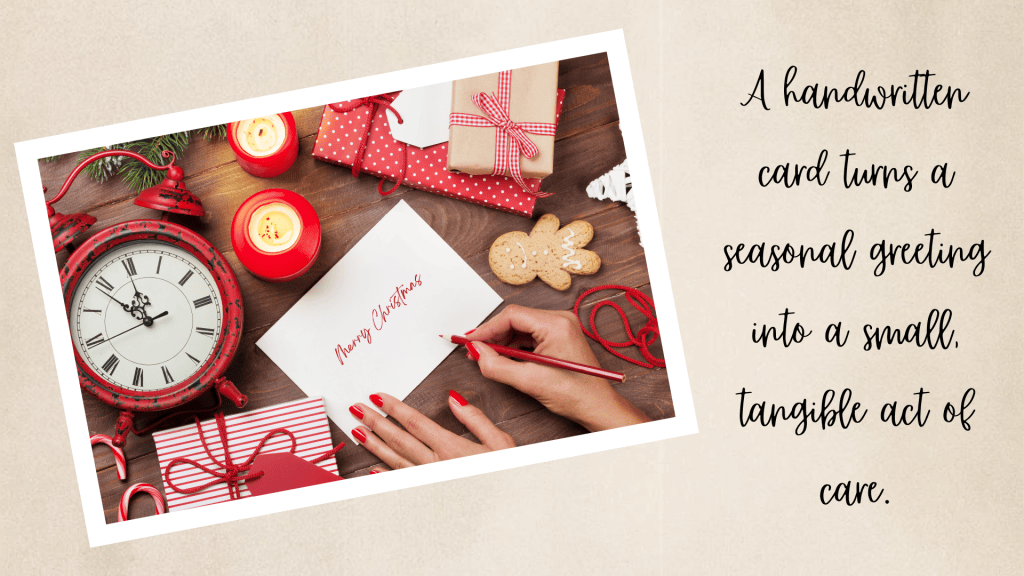
Day 1: Write and Send Real Christmas cards
Start with a small circle. Choose a handful of people who would appreciate a thoughtful note, then set aside a quiet hour to write by hand. Share a favorite memory from the year, a hope for the season, or one specific thing you appreciate about the recipient. A few sincere sentences are more meaningful than a perfect message.
Make the ritual inviting: put on gentle music, gather stamps and addresses before you begin, and keep a mug of something warm nearby. If you have children, let them add drawings, stickers, or their own wobbly signatures. The goal is not uniformity; it is connection.
- Keep it personal — Mention a shared moment instead of relying on a generic greeting.
- Make it manageable — Write a few cards at a time rather than turning it into a chore.
- Save a little surprise — Tuck in a family photo, pressed sprig, or tiny drawing.
Day 2: Make Handmade Decorations
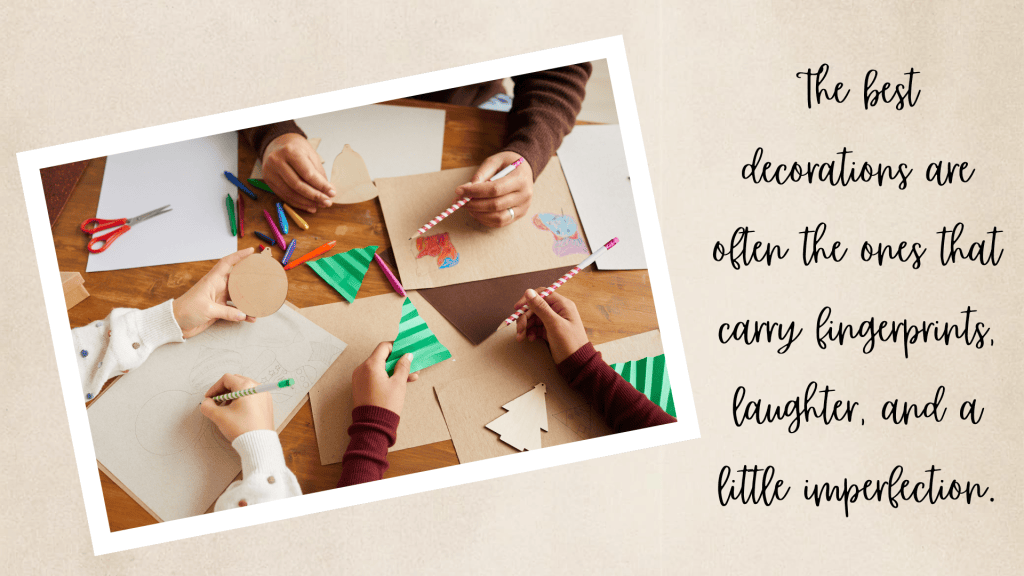
You did this in school. Why not now? Set out paper, scissors, string, fabric scraps, dried greenery, or anything else that sparks your interest. Fold paper stars, cut simple snowflakes, braid a garland, or turn old cards into ornaments. Choose projects that are satisfying rather than complicated.
Handmade decorations also give everyone a role. One person can cut, another can tie, and someone else can arrange the finished pieces. Do not worry about matching colors or achieving a polished finish. A tree or mantel filled with personal touches feels welcoming because it tells a story about the people who live there.
- Gather a small basket of materials before you begin.
- Pick one simple project and make a sample together.
- Display the results where everyone can enjoy them.
- Write the year or the maker’s name on special pieces so they become part of your tradition.
Day 3: Cook or Bake from a Family or Friend’s Recipe
Make the recipe part of the memory. Choose a beloved family favorite or find a new recipe in a cookbook, then copy it onto a recipe card before you start. Reading from a card or a flour-dusted page feels different from checking a screen between every step. It keeps your attention on the ingredients, the people nearby, and the rhythm of making something together.
Invite someone to be the recipe reader, ingredient measurer, or official taste tester. Leave room for notes afterward: “use less spice,” “everyone loved this,” or “try this with orange zest.” Over time, the paper becomes more than an instruction sheet; it becomes a record of the kitchen and the people gathered there.
- Set up first — Measure ingredients, clear the counter, and place the recipe where it will stay dry.
- Cook together — Give each person one useful task, including younger helpers.
- Annotate freely — Add substitutions, family opinions, and tiny stories in the margins.

Day 4: Enjoy screen free games and activities
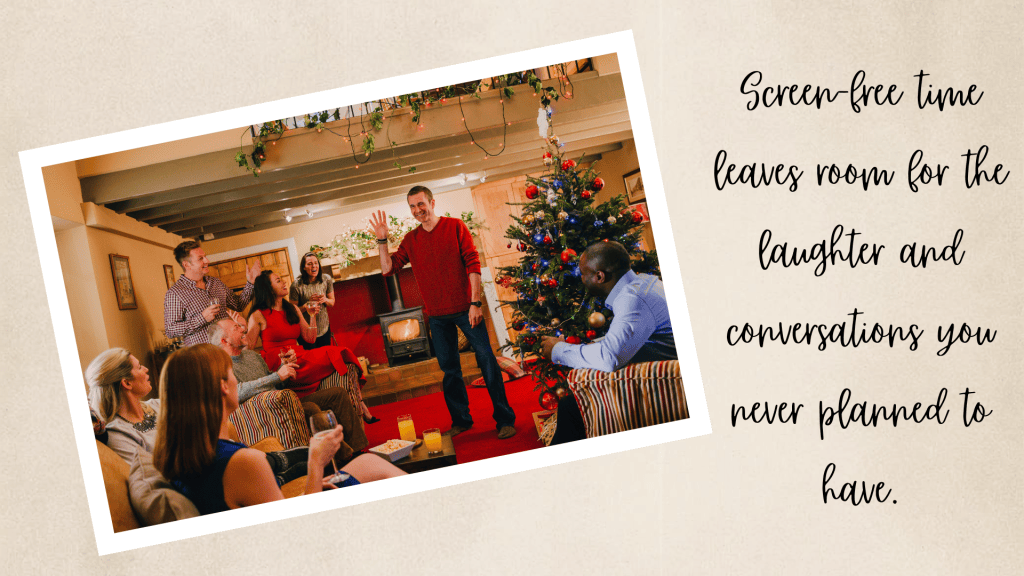
Give the evening somewhere to go. Put phones in another room, turn off the television, and bring out a deck of cards, a board game, a puzzle, or a stack of conversation prompts. If games are not your group’s style, try telling stories from past Christmases, sharing favorite songs, or asking everyone to describe a small kindness they noticed recently.
Keep the stakes low and the invitation open. Pick games that can be learned quickly, let people join or leave between rounds, and make room for snacks. The point is not to win or fill every silence. It is to create the kind of shared attention where a funny story can unfold and a quiet person has time to speak.
- Choose one screen-free activity before the gathering begins.
- Place the game, cards, or conversation prompts in an easy-to-reach spot.
- Let the group decide when to switch activities or simply keep talking.
Day 5: Create a Printed Christmas Memory Album or Scrapbook
Turn the season into something you can revisit. Print a few favorite photographs, collect ticket stubs or recipe notes, and invite everyone to add a sentence, drawing, or small memento. You can make one shared scrapbook, a simple photo album, or a few decorated pages in a notebook. There is no need to document everything; choose the details that bring the day back to life.
Give the album a little structure so it is easy to finish. Start with a title page, then add sections such as “what we made,” “what made us laugh,” and “what we want to remember.” Leave a blank page at the end for next year’s notes. The finished book can become part of the decorations, brought out whenever you want to return to the feeling of the season.
- Gather — Photos, paper scraps, ribbons, handwritten notes, and other flat keepsakes.
- Arrange — Lay everything out before gluing so the pages feel balanced and personal.
- Record — Add names, places, favorite moments, and the stories a photograph cannot tell.

Day 6: Read a Christmas Book or Novel
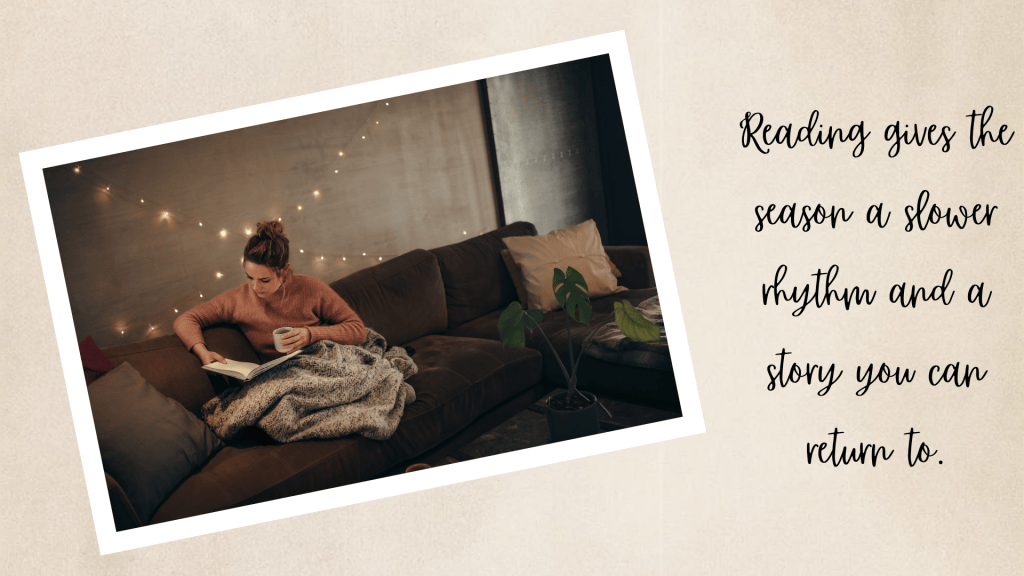
Let a story slow the room down. Choose a Christmas book, a familiar novel, or a story you have been meaning to read, then make a comfortable place for it. Reading creates a natural pause and gives the evening a mellow shape. And of course, this is a favorite activity here at Brown House Books.
- Choose a shared story — Read a favorite passage aloud or take turns reading if the group enjoys it.
- Make it easy to return to — Leave the book on a chair or side table with a bookmark ready.
- Read at your own pace — A few pages can be enough; the ritual matters more than finishing.
Day 7: Listen to Records, CDs, or Live Acoustic Music
Let music become part of the gathering. Choose a record or CD that feels connected to the season, or invite someone to play a few songs acoustically. The small pauses between tracks, the act of turning a record over, and the shared attention of listening can make familiar music feel new again.
- Make a short selection — Pick a few albums or songs that suit the mood instead of filling every moment with sound.
- Share the story — Tell the group why a song matters or where you first heard it.
- Invite participation — Make room for singing, humming, or an informal acoustic performance. Want a great example of this? Search: Maritime Kitchen Party.

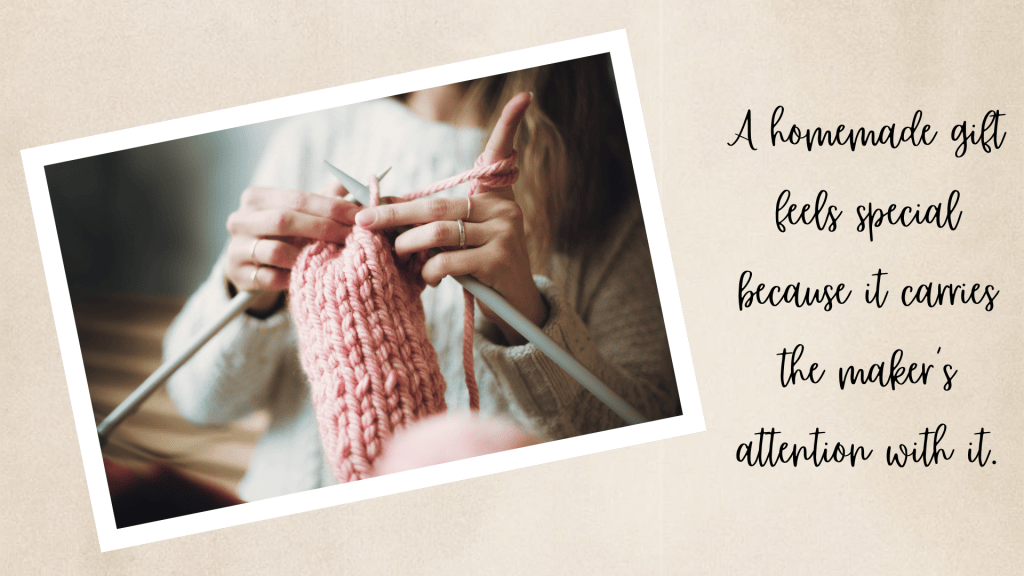
Day 8: Make and Exchange Homemade Gifts
Give something that carries your time. Make a small gift with materials you already have or enjoy working with: baked treats, a knitted item, a drawing, a handwritten collection, or something simple from the kitchen. The best homemade gifts are not demonstrations of perfection; they are evidence that someone thought carefully about the person receiving them.
- Match the gift to the person — Consider what they use, collect, enjoy, or would find comforting.
- Keep the project friendly — Choose a design you can finish without rushing or overcomplicating it.
- Exchange the stories — Share how the gift came together when you give it.
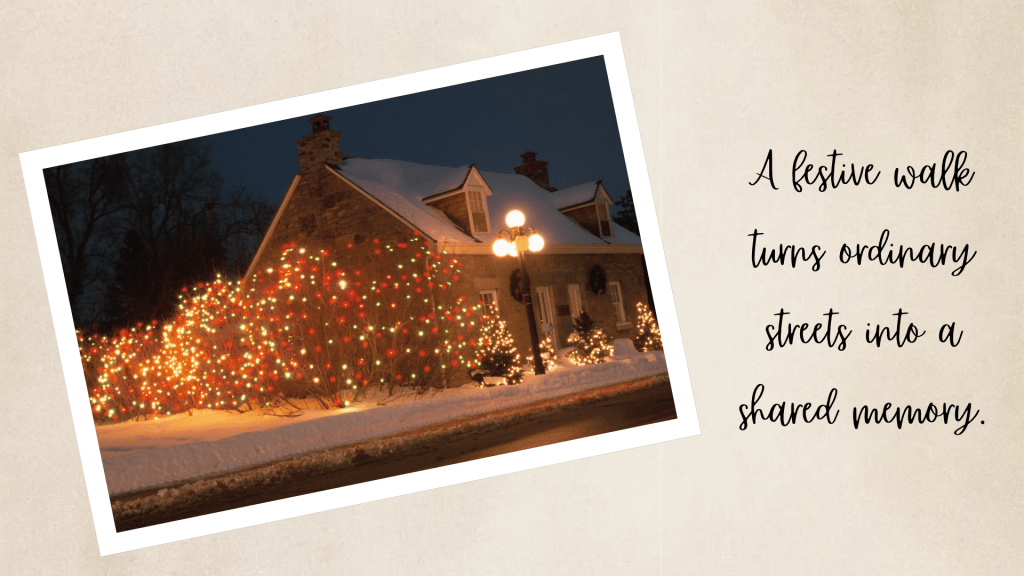
Day 9: Take a Festive Walk
Step outside and let the neighborhood be part of the celebration. Take a walk with no destination beyond noticing what is around you. Look for decorated windows, familiar streets, winter trees, porch lights, and the small signs of care that make a place feel festive.
- Leave the phone behind — Give yourself permission to notice without photographing everything.
- Walk at an easy pace — Stop for a view, a conversation, or a detail you might otherwise miss.
- Share what you saw — Talk about the most welcoming, funny, or surprising decoration afterward.
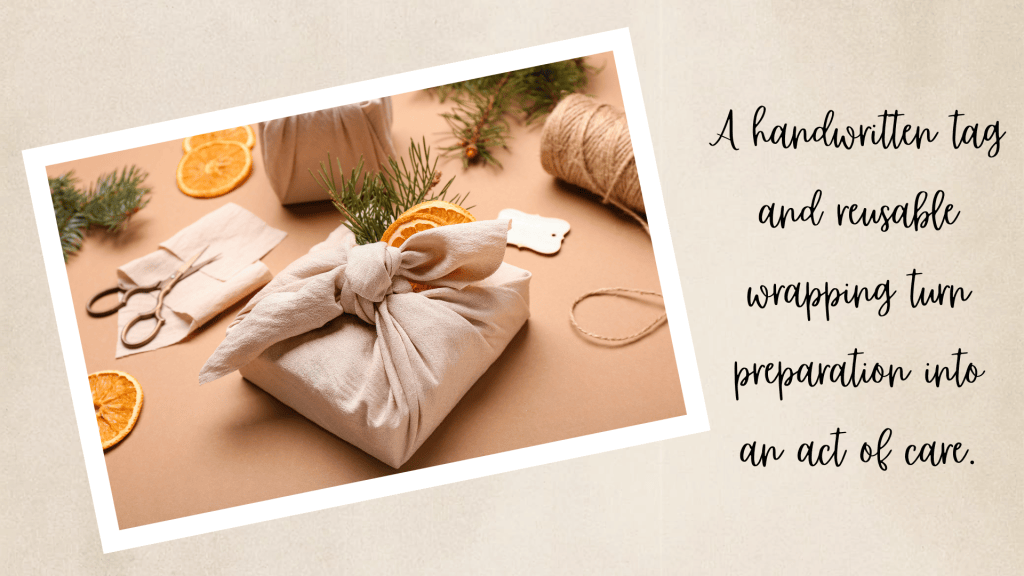
Day 10: Wrap Gifts with Reusable Paper and Handwritten Tags
Make the wrapping part of the gift. Gather fabric, reusable paper, old maps, tea towels, or festive reusable shopping bags, then give each package a personal finish. Handwritten tags slow the process down and make even a simple parcel feel connected to the person who will open it.
- Reuse what you have — Look for paper, fabric, ribbons, boxes, and tags that can begin a new life.
- Write a warm note — Add the recipient’s name and one sentence about why you chose the gift.
- Save the supplies — Fold reusable materials neatly and keep them ready for another season.
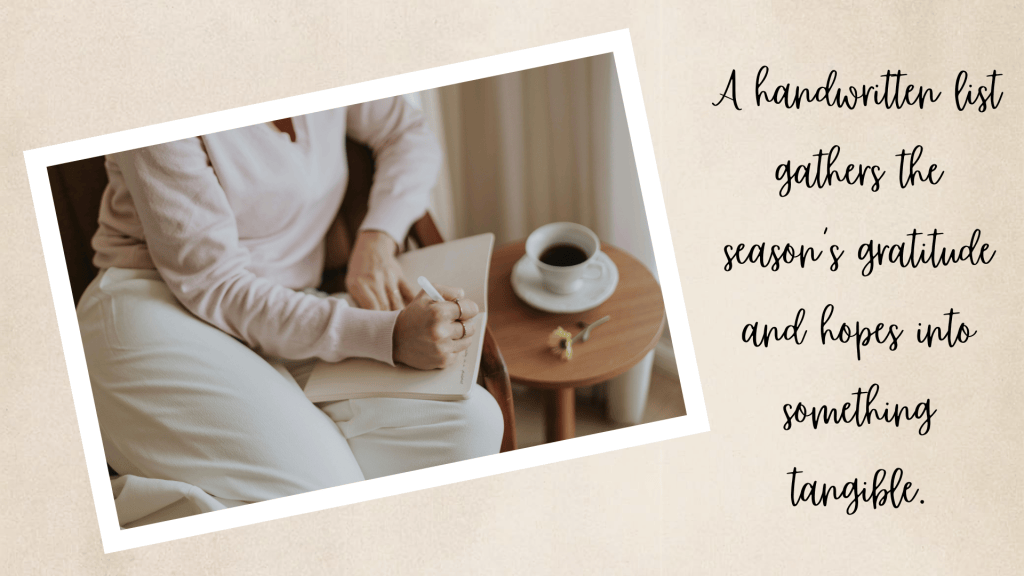
Day 11: Make a Seasonal Gratitude or Wishes List by Hand
Give your thoughts a place to land. Set out a notebook and a pen, then write a few things you are grateful for, hopes you want to carry forward, or wishes for the people around you. The list can be private, shared aloud, or tucked away to revisit when the season returns.
- Keep it specific — Name a person, moment, place, or small kindness rather than reaching for a general phrase.
- Make room for hope — Include wishes for yourself, your household, your community, or the year ahead.
- Share by choice — Invite others to read a line or keep their lists entirely their own.
Day 12: Light Candles and Create a Quiet Evening Ritual
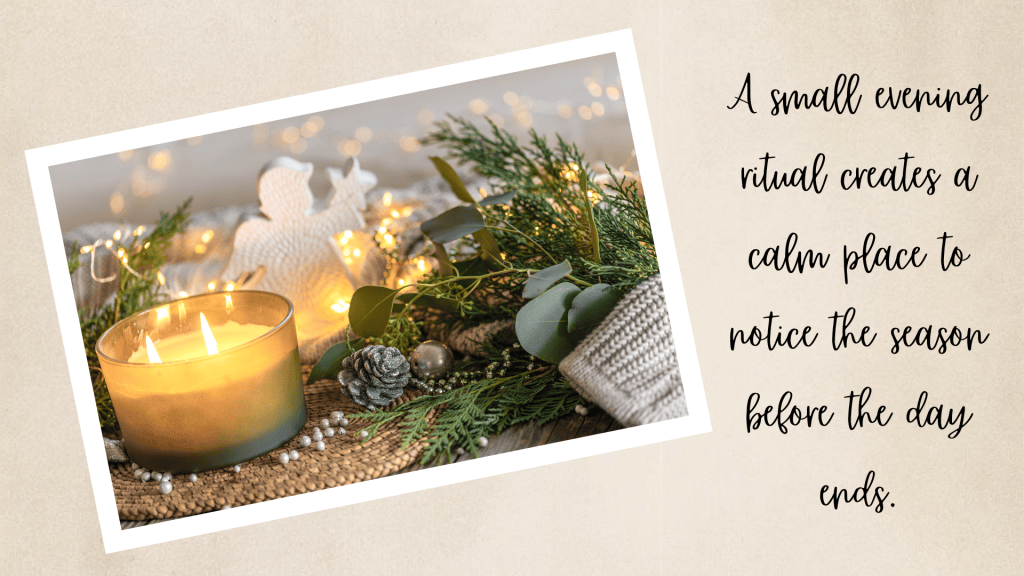
End the day by making quiet feel intentional. Dim the lights, light a few candles safely, and choose a simple ritual to repeat whenever you want the evening to soften. You might make tea, read a chapter, listen to music, say a few words of thanks, or simply sit together without needing to fill the silence.
- Choose a safe setting — Place candles on a stable surface away from anything that could catch fire, and never leave them unattended.
- Keep it simple — Pair the light with one quiet activity rather than planning an elaborate routine.
- Let the silence work — Allow conversation, stillness, or reflection to arrive naturally.
Carry the Countdown into the Christmas You Want to Remember
An analog Christmas is not about rejecting every modern convenience. It is about choosing moments to be fully present: write something, make something with your hands, bake, listen closely, walk and notice, talk without distractions, and preserve the memories in a form you can hold.
The 12 days are not a test to complete perfectly. Try all 12 rituals as a fun countdown, or choose the ideas that fit your household and let them become a personal collection of ways to slow down, connect, and remember the season.

